
Fair Voting BC recently partnered with a number of like-minded organizations, as well as with former Vancouver Mayor Kennedy Stewart, to write an open letter to the Special Committee endorsing committee Deputy Chair Ward Stamer’s proposal to grant municipalities around BC the power to adopt more inclusive and representative voting systems. The text of our letter, as well as the list of signatories, is below (sent to the committee October 8th, 2025):
Local Choice: Give Municipalities Power to Modernize Their Voting Systems
Dear Members of the Special Committee on Democratic and Electoral Reform:
We, the undersigned individuals and organizations, strongly endorse Deputy Chair Ward Stamer’s suggestion that your committee recommend that the BC government grant municipalities around BC the power to adopt alternatives to first-past-the-post voting that could enable them to elect more representative and diverse councils that better reflect the voters in each municipality.
We are all deeply aware of the challenges that our current At-Large block voting system for
electing council members poses in many municipalities:
- Across Metro Vancouver, while 57% of residents have a racialized background
(according to Statistics Canada), only 26% of current city councillors do. Vancouver has
infamously not elected anyone to council from its strong and active South Asian
community since V. Setty Pendakur in 1972, and currently has only one councillor with a
Chinese background, despite people with a Chinese background making up over a
quarter of Vancouver’s population. Similarly, while close to half the adults aged 18-65 in
this region are under the age of 40, fewer than 15% of the councillors and mayors
elected in 2018 were. - Political minorities, too, face challenges being represented. Under the At-Large system,
the party with the strongest plurality can often sweep every single council seat (for
example, as happened in Delta in 2022 and in Burnaby and Surrey in 2014). Voters with
different political views often end up electing no-one. In many cities and towns, the
leading party often wins about twice as many seats as their vote share warrants – current
examples include Maple Ridge (67% of seats with 30% of the votes), Surrey (50% seats
with 24% of votes), Vancouver (70% of seats with 35% of votes), Langley Township
(64% of seats with 35% of votes), Langford (83% of seats with 49% of votes), and
Burnaby (75% of seats with 46% of votes). - Finally, particularly in cities where there are significant differences in wealth between
different neighbourhoods, it is possible for virtually all the councillors to come from one
part of town and for whole sections of the city to not elect any representatives.
Vancouver has historically elected councils where all (or nearly all) councillors came
from the city’s west side.
Besides the issues caused by At-Large voting for councils, the way we elect mayors also needs
reform:
- Mayors can win election with much less than a majority of the vote, often with well under
40% — examples from 2022: Surrey (28%), Kamloops (32%), Williams Lake (34%),
Penticton (34%), Sechelt (36%), Merritt (36%), and White Rock (38%). - Vote splitting can result in a candidate winning who could have lost in a head-to-head
contest with the next closest candidate - Low levels of support and evidence of vote-splitting can call the mayor’s legitimacy into
question, making it more difficult for them to build public consensus and lead the city.
These weaknesses of our present municipal voting system have been recognized for over 20
years. For example, in 2004, Justice Thomas Berger recommended in his Vancouver Electoral
Reform Commission report that “Council seek amendment of the Vancouver Charter to permit
elections to be conducted using systems of proportional representation.” Several councils have
since endorsed this request, under mayors from several different parties. Former mayor Larry
Campbell once said “Canada’s cities face increasing challenges and need more freedom to
shape their election practices to better engage citizens and inspire trust. It’s well past time for
Vancouver to be granted this power.”
In 2016, Ontario passed The Municipal Elections Modernization Act that gave municipalities the
option to use alternative voting systems, and London was the first city to take advantage of this
freedom, so there is clear precedent in Canada (as well as in countries such as New Zealand,
and, closer to home, in Oregon, where Portland recently successfully moved to multimember
ranked choice voting) for giving municipalities this option.
Deputy Chair Stamer expressed considerable support for this idea, saying, “I think what we will
probably be recommending, for sure, is an opportunity for the municipalities to see if there is
something they would like to try in their regions to see if that’s an option or not. And again, it’s
totally up to the municipalities whether they want to do it or not, but I think it would give us a trial
run on how it could actually be replicated through the province.”
With former Vancouver Mayor Kennedy Stewart having recently launched a petition drive and
possible legal case challenging the discriminatory effects of our current voting system, and your
committee scheduled to deliver its report later this fall, you have an extremely timely opportunity
to take action to provide a path away from the highly problematic voting system that most towns
in BC currently use.
We therefore urge your Special Committee to recommend that the legislature pass legislation
allowing municipalities to choose to adopt alternative voting systems that give all voters a voice
on council and a clearer mandate to mayors. By doing so, you will help create a more vibrant
democracy that will work better for everyone. Please take this golden opportunity to strengthen
trust in our core democratic institutions and ensure that every voice matters in shaping the
future of our communities.
Sincerely,
- Fair Voting BC
- Unlock Democracy Canada
- Fair Vote Canada
- Apathy is Boring
- Springtide Collective for Democracy
- Sightline Institute
- ACORN BC
- Saanich 123
- Kennedy Stewart (former mayor of Vancouver)
Additional endorsers:
- CityHive
- BC Civil Liberties Association





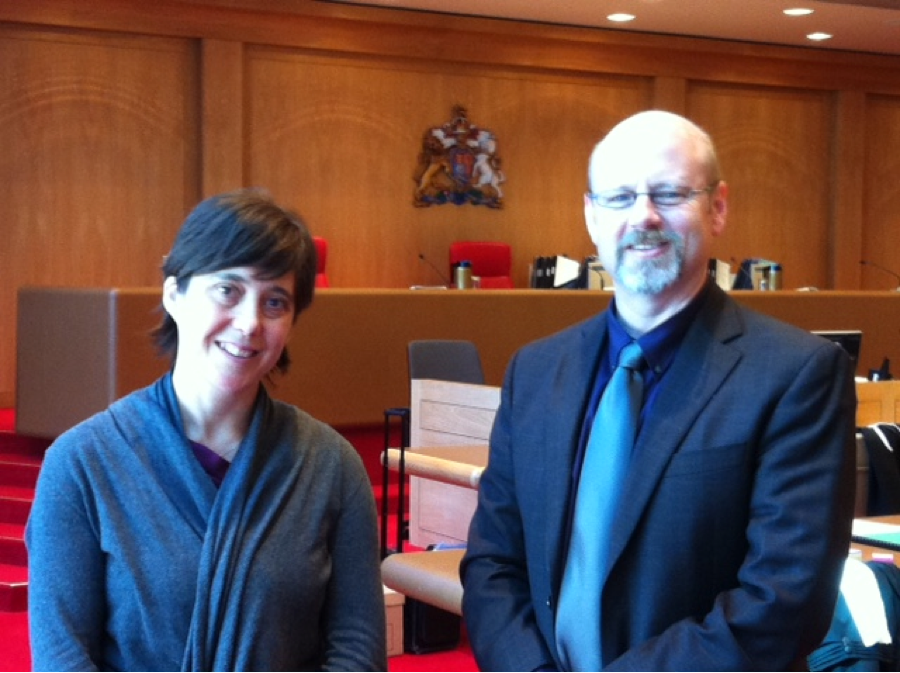
 We are particularly excited to let you know that we’ve confirmed the date for our second E-volving Democracy Dialogue which will be held on Saturday, October 27th in Vancouver (likely 2-4:30pm). The topic will be ‘Engaging Citizens’, and we’ll be looking at some fascinating models for giving people more meaningful ways to get involved in political processes. We expect to have speakers from the


 This weekend Thomas Mulcair was elected the new leader of the federal NDP and therefore of the Official Opposition. We are pleased that Mulcair has said that moving to a mixed-member proportional system will be a fundamental plank of the New Democratic Party’s platform next election: “Canadians are well aware of the pitfalls of our electoral system. They agree with us that change is needed. When we get elected, we will get elected with a strong mandate to address those shortcomings. If needed, we will cooperate with other parties in the House of Commons and the Senate in order to make electoral reform a reality.” We urge electoral reform supporters to hold the NDP to account moving forward.
 As Elections Canada digs deeper into the voter suppression tactics employed in the last federal election (largely against Liberal supporters), we are reminded that the main reason such tactics can be effective is because of the pathological sensitivity of our current Single Member Plurality voting system to small manipulations of votes. With SMP, numerous ridings are typically won by vanishingly small numbers of votes (e.g., Jay Aspin won by only 14 votes in Nipissing and Ted Opitz by just 26 votes in Etobicoke Centre). Adding these up, we find that barely
  BC Liberal MLA John Les (Chilliwack) this month
  In the wake of last week’s filing of financial disclosure statements by Vancouver’s civic parties, showing that donations were up 50% from 2008 (from just under $4M then to just under $6M last year), including a single corporate donation of nearly $1M, Minister Ida Chong has said she won’t implement the request from Vancouver City Council to limit personal donations or ban union, corporate and foreign donations.

 Fair Voting BC